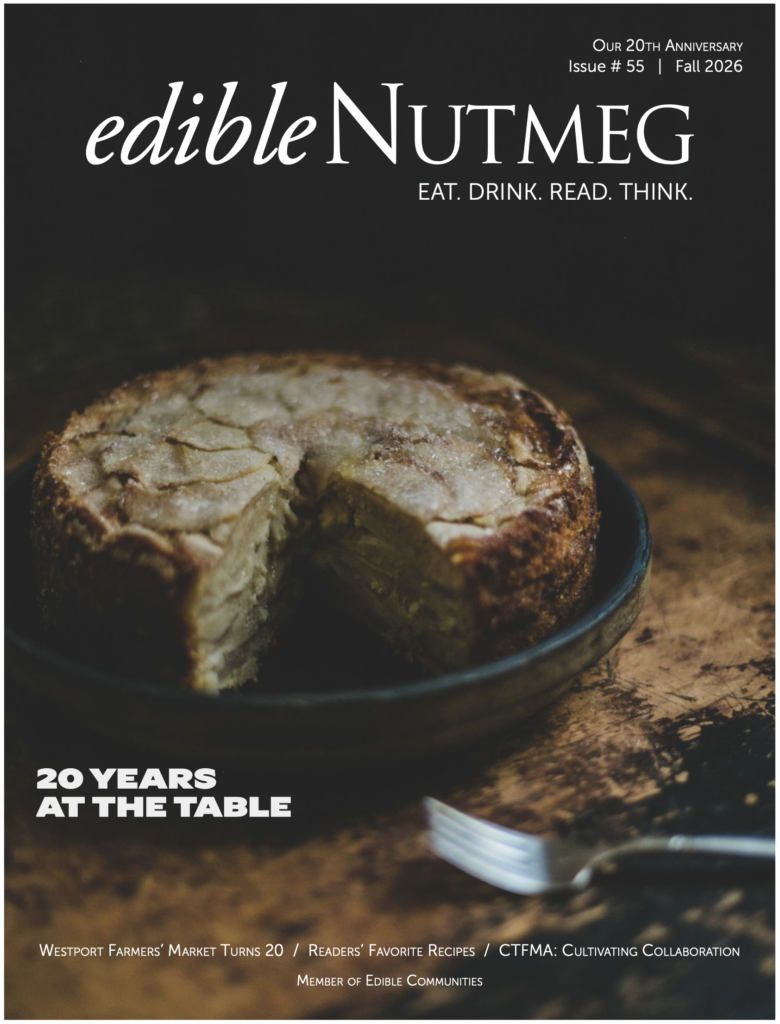


HOW A HOLLYWOOD LEGEND TURNED SALAD-DRESSING MOGUL, A JAMES BEARD AWARD-WINNING CHEF, AND ONE RELENTLESSLY PRINCIPLED EXECUTIVE DIRECTOR CREATED THE BLUEPRINT FOR WHAT A FARMERS’ MARKET CAN BE
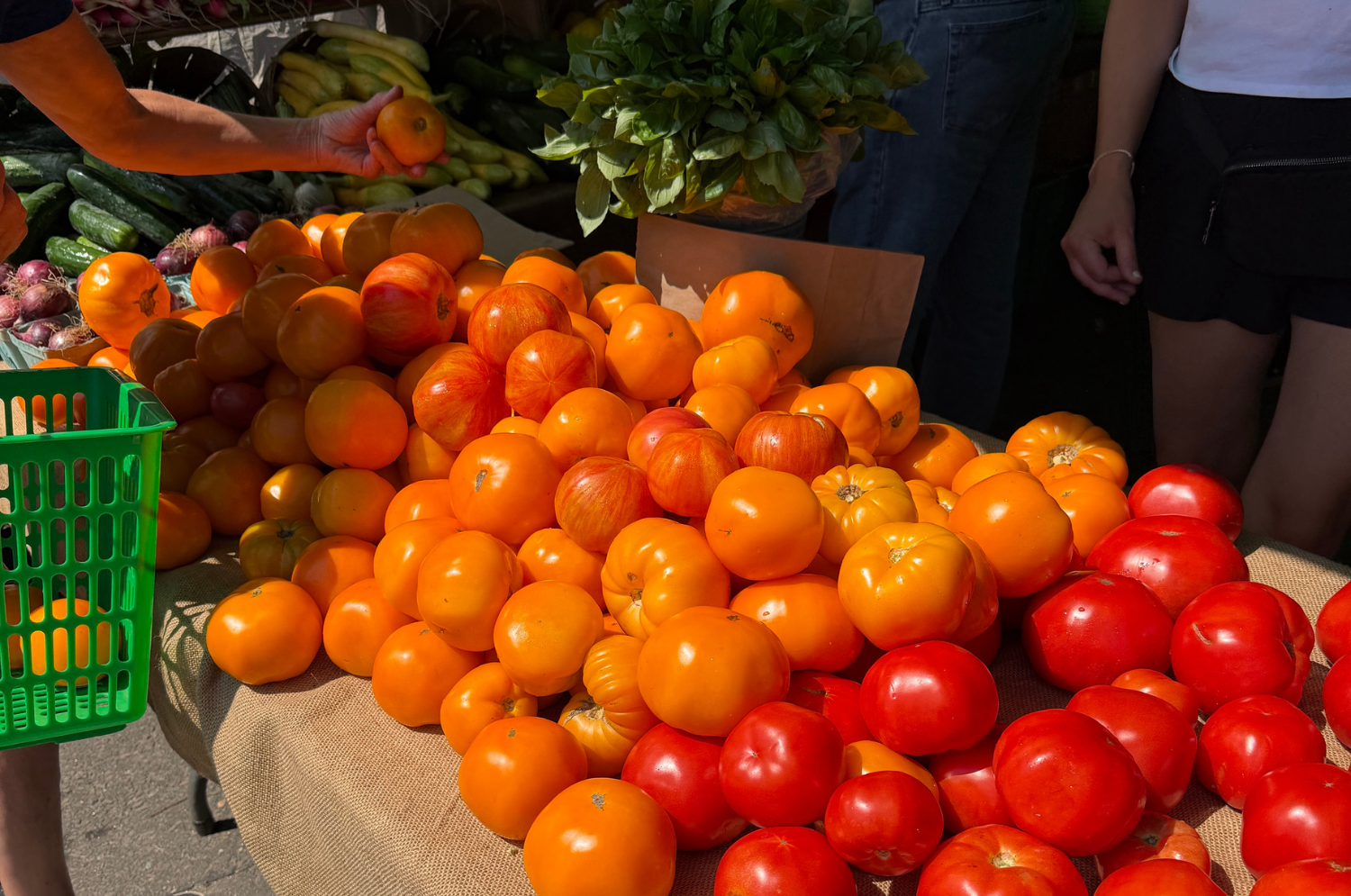
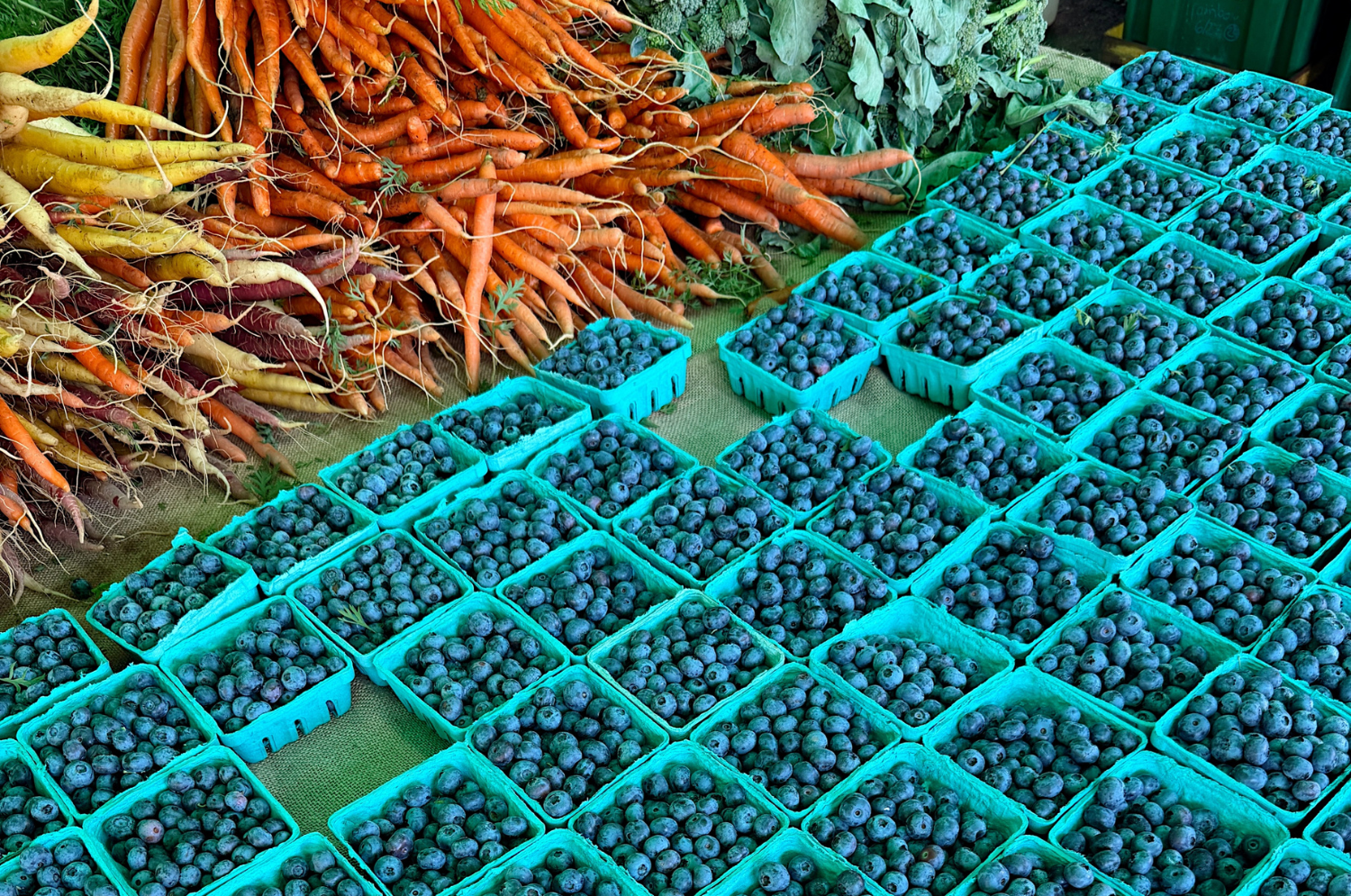
On a Thursday morning in downtown Westport, the scene at 50 Imperial Avenue looks, at firstglance, like any well-heeled farmers’ market. Vegetables displayed in colorful rows. Cheesemakers slicing wedges for samples. Friend of Market-branded tote bags filled to the brim (no plastics allowed). But linger a little longer and something else becomes clear over the live music and voices of friends greeting friends: This is not simply a market. This is an entire ecosystem built 20 years ago on the idea that access to local food impacts the entire community.
A SEED PLANTED IN A PARKING LOT
The story begins in the parking lot behind the Westport Country Playhouse—home, at the time, to The Dressing Room, the farm-to-table restaurant co-owned by famed actor Paul Newman and acclaimed chef Michel Nischan. Well into that time, Newman had reinvented himself as the founder of Newman’s Own, a food company built on the premise of giving away all its profits. Nischan, on the cusp of founding Wholesome Wave, had an early conviction about ending food and nutrition insecurity through the power of local food systems. They decided the region needed more than a restaurant. It needed a marketplace.
They opened in June, 2006 with 14 vendors and folding-table informality. Around 500 shoppers showed up, drawn as much by curiosity as by conviction. Nobody involved could have predicted that this modest experiment would still be running two decades later, let alone that it would grow into one of the most tightly run, mission-driven markets in the country.
By 2009 the market had outgrown the Playhouse lot and relocated to its current home onImperial Avenue. A year later, Gilbertie’s Herb Gardens opened its doors to host a winter iteration, allowing the market to operate essentially year-round and marking the moment the Westport Farmers’ Market (WFM) stopped being a seasonal pop-up and started becoming an institution.

THE STANDARD-BEARER
If Newman and Nischan planted the seed, it is Executive Director Lori Cochran-Dougall who has tended it into what it is today. Cochran-Dougall took the reins in 2010 and has run the market ever since, building a reputation for implementing what is widely regarded as the strictest set of vendor standards of any farmers’ market in Connecticut.
Under her leadership, WFM has become a proving ground for what a sustainable market can look like in practice, not just in mission statements. Vendors are curated, not simply admitted: Everything sold must be grown, raised, or made by the person selling it, with an emphasis on sustainable and GMO-free growing practices.
Packaging is treated as seriously as provenance; the market demands a zero-plastics standard among its vendors, dovetailing with Westport’s own pioneering 2019 single-use plastics ordinance prohibiting plastic and Styrofoam food-service containers town-wide.
“This market was born from an extraordinary vision that food could be a force for connection, health, and justice,” Cochran-Dougall said as the market opened its 20th season this year. “Twenty years later, that vision has never felt more urgent or more alive.”
That vision today spans a roster of more than 60 highly curated vendors—bakers, cheese mongers, oyster farmers, herb growers, small-batch preservers—nearly quadruple the market’s opening-day roster, all still held to Cochran-Dougall’s exacting standards.
CHAMPION OF THE FARMER
Ask anyone who has worked alongside Cochran-Dougall and the same theme surfaces: Her standards exist to protect farmers, not merely to impress shoppers. Running a small farm in one of the most expensive counties in the country is a precarious business, and Cochran-Dougall has structured the market around shielding growers from the pressures that put so many out of business elsewhere. Vendor fees are kept deliberately low, even as operating costs climb, so that a small produce farm or a one-person bakery can afford a spot at the table alongside larger operations.
To close that gap, the market and its board of directors lean hard on fundraising, running events like Fork It Over and the market’s Farmer’s Fund, which offers direct financial support to the growers, fishers, and producers who make up its vendor roster. It is a model built on a simple premise: A market can’t claim to support local agriculture if the farmers selling there are barely breaking even. Cochran-Dougall makes sure that is never the case, treating every vendor as a partner whose livelihood the market exists, in part, to protect.
MORE THAN A MARKET, A MISSION
What separates WFM from the merely picturesque is that it treats surplus food and market resources not as leftovers but as a form of civic infrastructure. Over the years, Cochran-Dougall has built a wide range of community programming around its weekly rhythm, allowing it to become a major player in local food security and education.
Every week, for example, the market redirects unsold fresh, high-quality food to people who need it most rather than letting it go to waste. Partners include Food Rescue, the Bridgeport Rescue Mission, and Homes with Hope, as well as the Gillespie Center, where culinary students from Staples High School prepare and serve healthy meals sourced in part from market donations. Extending its impact beyond Westport’s borders, the market is also in partnership with the nearby Norwalk Arts Space to provide farm-fresh ingredients sourced directly from its vendors to Art Space Café chef Caitlin McGowan and café baker and manager Kelly Clement, who transform them into healthy meals for underprivileged students ages 9-18.
The market’s educational programming is equally robust and includes its Get Growing initiative, which introduces children to farming and food systems from the ground up, as well as the annual Young Shoots photography contest that invites kids and teens to document the market—and, by extension, the farmers behind it—through their own eyes. Pairing nourishing food with art classes, tutoring, and culinary education provides a living demonstration of the market’s belief that local food, grown and shared with intention, can change the trajectory of a young person’s life.
Cochran-Dougall is particularly proud of the market’s Farmers to Veterans to Community program, which demonstrates support for military veterans. Noted local chefs shop at the market alongside women veterans, then lead hands-on cooking demonstrations and shared dinners that double as informal job- and life-skills sessions. The commitment is personal for Cochran-Dougall, whose husband Nate serves currently as a Lieutenant Colonel in the Connecticut Army National Guard and is a veteran who deployed as part of Operation Iraqi Freedom. Says Cochran-Dougall, “This puts to work—literally—our values of giving back to the community, by helping those who have given so much of themselves.”
WHY LOCAL FOOD IS A PUBLIC HEALTH STRATEGY
It would be easy to file all of this under “nice to have.” Cochran-Dougall and her board don’tsee it that way. In an era when food insecurity, chronic disease, foodborne illnesses, and the erosion of small farms are converging problems rather than separate ones, a farmers’ market with the infrastructure and discipline of Westport’s functions as something closer to public health policy.
Local food systems shorten the distance—literally and figuratively—between the people growing food and the people eating it, which has measurable consequences for a community’sresilience. When a region depends heavily on long, brittle supply chains, a single disruption—a storm, a shortage, a pandemic—can leave grocery shelves bare and vulnerable families with nowhere to turn. A market like Westport’s, anchored by dozens of regional farms, fishers, and food producers, acts as a shock absorber: food security built from the ground up, not shipped in from three states away.
There is a nutritional argument here, too: one that Cochran-Dougall and the market’s chef partners return to often. Food harvested within days, not weeks, of reaching a shopper’s table retains more of its nutrient density and, just as importantly, it tastes like something worth cooking. That’s not a small thing in a country where public health officials have spent decades trying to get people to eat more vegetables. A perfect August tomato, still warm from a Connecticut field, makes a more persuasive case than any nutrition pamphlet.
During the COVID-19 pandemic, the market kept operating as an essential food source even as most public gatherings shut down. Almost overnight, the market moved to a distanced format, with online pre-ordering and pick-up or drive-through options, so shoppers had access to fresh food. That format kept a direct line open between local farmers, many of whom suddenly lost restaurant wholesale accounts, and home cooks who needed to feed their families three meals a day. The market also kept its Grow-a-Row produce donation program running, collecting extra produce from shoppers and home gardeners and delivering them to organizations in need. In a moment when grocery shelves were unpredictable, and food banks were stretched thin, the market gave both farmers and neighbors in need a steady, local place to turn.
WHERE THE DOLLARS GO
There is an economic argument braided through all of this, too. Every dollar spent at a farmer’s stall does more local work than the same dollar spent at a national chain.
Money paid directly to a farmer, a fisherman, or an artisanal maker doesn’t disappear into a distant corporate ledger—it stays close to home, cycling back through the regional economy as that farmer buys seed from a neighboring supplier, hires local labor, or spends their earnings at other local businesses.
For the small-scale producers who make up the market’s roster, that direct-to-consumerdollar isn’t incidental. It is often the difference between a viable livelihood and an unsustainable one. Connecticut has been losing farmland for decades; every market transaction is, in a small way, an argument for why that land is worth protecting.
Bill Taibe, a James Beard Best New Chef nominee and the multi-hyphenate force behind restaurants like The Whelk, Kawa Ni, and Norwalk Art Space Cafe, said it plainly as the market opened its 20th season: “Farmers are the backbone of our industry; they shape how we cook, what we serve and, ultimately, how we eat. Their work impacts not just the quality of our food but the health of our community and the strength of our local economy.” It isn’t just a place to shop, he adds, “it’s where relationships between cooks, farmers, and community actually happen.”

A MARKET BELOVED BY CHEFS
That relationship between kitchen and field has, over two decades, drawn an outsized roster of culinary talent to a market in a town of roughly 28,000 people. Nischan set the tone early,and Fairfield County’s chef community never really let go of the habit.
Taibe has been a fixture of the market almost since its founding, both as a shopper and, now,as a board member. Matt Storch of Match Burger Lobster and Saugatuck Provisions has been a regular presence at the market’s fundraising dinners, as has Tim LaBant, formerly of the Schoolhouse at Cannondale, and John Barricelli of SoNo Baking Company. Brian Lewis and Christian Wilki of OKO and The Cottage in Westport built an entire seasonal tasting menu around the market’s vendors, sourcing everything from Fort Hill Farm heirloom carrots to Ideal Fish rainbow trout for a dinner explicitly billed as a collaboration with the market itself.
Much of this chef engagement crystallizes each year in Fork It Over, the market’s marquee fundraising dinner series, which has featured rotating guest chefs cooking multi-course,market-driven meals in mystery locations revealed only days before the event. It is a format that has become one of the hottest tickets in the Fairfield County food calendar—proof that a farmers’ market, run with enough ambition and integrity, can command the same kind of culinary devotion as a destination restaurant.
TWENTY YEARS IN, STILL GROWING
Today, walking the Imperial Avenue lot on a Thursday, it’s hard to imagine the market as small as it once was. But the through line is unmistakably the same: a conviction, inherited from Newman and Nischan and sharpened over 16 years by Cochran-Dougall, that a farmers’market can be judged by more than the quality of its produce. It can be judged by who it feeds, who it employs, what it keeps out of landfills, and how much of every dollar spent there actually stays close to home.
As the market enters its third decade, that founding idea—food as connection, as health, as justice—looks less like nostalgia and more like a blueprint. Twenty years after two friends opened a stand in a parking lot, Westport Farmers’ Market has become proof that a town’s food system, done right, can be one of its most powerful tools for keeping a community fed, employed, and whole.
-
Westport Farmers’ Market: 50 Imperial Drive, Westport, CT; westportfarmersmarket.com